

_ _ _ _ _ _ _ _ _ _ _ _ _ _ _ _ _ _ _ _ _ _ _ _ _ _ _ _ _ _ _ _ _ _ _ _ _ _ _ _ _ _ _ _ _ _ _ _ _ _ _ _ _ _ _ _ _ _ _ _ _ _ _ _ _ _ _ _ _ _ _ _ _ _ _ _ _ _ _ _
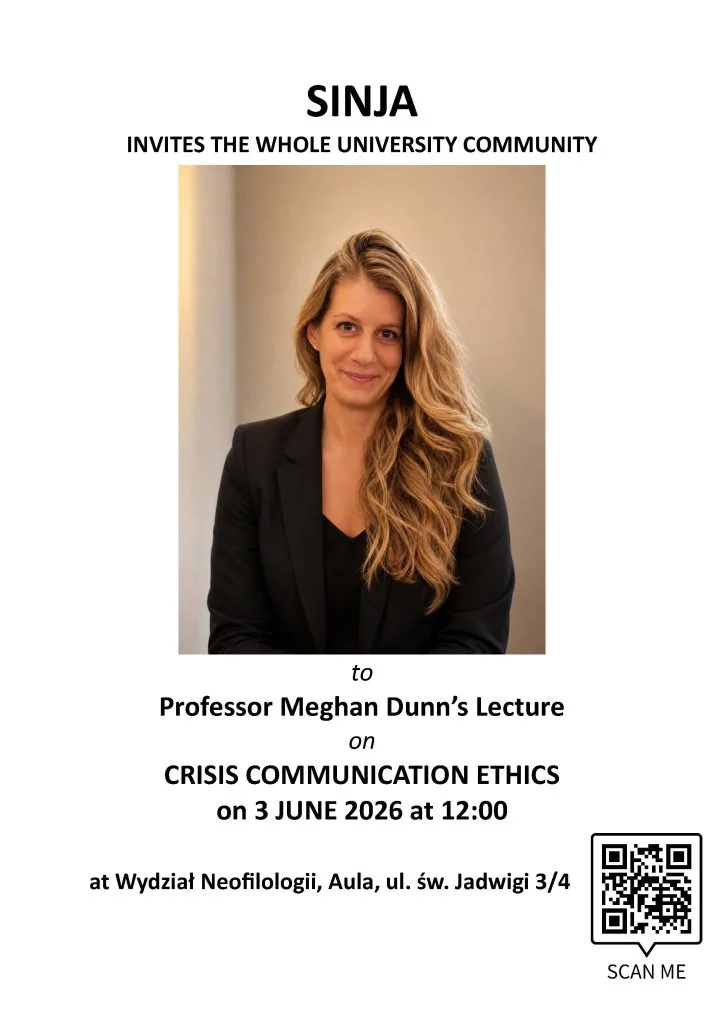
Prelegentka: Profesor Meghan Dunn, St. John’s University, New York
Data: 3 czerwca 2026 r. (środa), godz. 12.00
Gdzie: Wydział Neofilologii, ul. Świętej Jadwigi 3/4, Aula
Tytuł wykładu: Crisis Communication Ethics
_ _ _ _ _ _ _ _ _ _ _ _ _ _ _ _ _ _ _ _ _ _ _ _ _ _ _ _ _ _ _ _ _ _ _ _ _ _ _ _ _ _ _ _ _ _ _ _ _ _ _ _ _ _ _ _ _ _ _ _ _ _ _ _ _ _ _ _ _ _ _ _ _ _ _ _ _ _ _ _
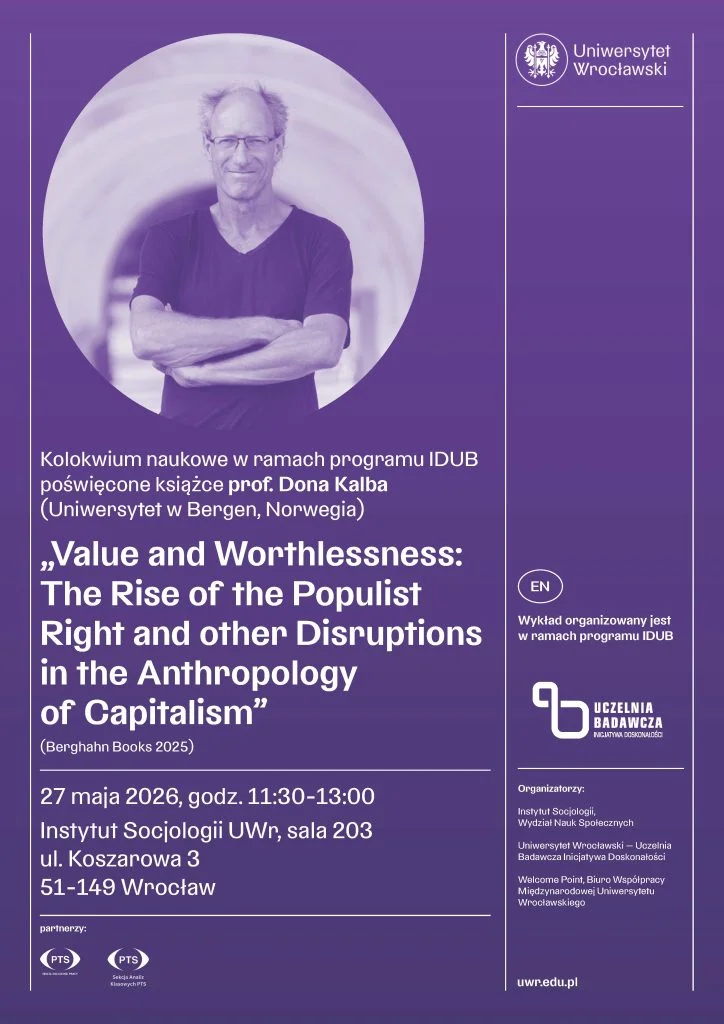
Instytut Socjologii Uniwersytetu Wrocławskiego zaprasza na wykład i seminarium z prof. Donem Kalbem (University of Bergen) pt. „Global disruptions: Value, Worthlessness, Cheapness” oraz seminarium lekturowe wokół książki prof. Kalba “Value and Worthlessness: The Rise of the Populist Right and other Disruptions in the Anthropology of Capitalism” (Berghahn Books 2025).
Wizyta prof. Dona Kalba w Uniwersytecie Wrocławskim finansowana jest ze środków programu „Inicjatywa Doskonałości – Uczelnia Badawcza”.
Partnerami wydarzeń są Polskie Towarzystwo Socjologiczne o. Wrocław, Sekcja Analiz Klasowych PTS oraz Sekcja Socjologii Pracy PTS oraz Wrocławski Instytut Kultury
Program wizyty obejmuje dwa wydarzenia:
· 26 maja 2026, w godz. 18:00-20:00, w klubokawiarni Recepcja (Wrocław, ul. Ruska 46a) odbędzie wykład otwarty prof. Dona Kalba pt. „Global disruptions: Value, Worthlessness, Cheapness” w ramach cyklu SocjoPercepcja (vol. 55).
· 27 maja 2026, w godz. 11:30-13:00, w Instytucie Socjologii Uniwersytetu Wrocławskiego (ul. Koszarowa 3, sala 203) odbędzie się kolokwium naukowe poświęcone książce prof. Kalba „Value and Worthlessness: The Rise of the Populist Right and other Disruptions in the Anthropology of Capitalism” (Berghahn Books 2025).
Sylwetka prelegenta:
Profesor Don Kalb jest czołowym antropologiem ekonomicznym i politycznym oraz profesorem antropologii społecznej na Uniwersytecie w Bergen w Norwegii (wcześniej na CEU w Budapeszcie). Był laureatem stypendium TOPFORSK przyznanego przez Trond Mohn Foundation, the University of Bergen i rząd Norwegii (2017-2023. Był współkierownikiem projektu na temat finansjalizacji w Max Planck Institute for Social Anthropology, Halle (2015-2018). Pełni funkcję dyrektora akademickiego programu GRIP dotyczącego globalnych nierówności (Uniwersytet w Bergen oraz International Science Council w Paryżu). Jego prace koncentrują się na kapitalizmie, klasach społecznych i ich powiązaniach, pracy i reprodukcji społecznej, polityce miejskiej i społecznej, w tym w ramach porządków nieliberalnych, a także na badaniach nad rasizmem i nacjonalizmem. Autor i redaktor kilkunastu ksiażek naukowych, w tym Insidious Capital: Frontlines of Value at the End of a Global Cycle (2024; laureat nagrody Society for Cultural Anthropology / American Anthropological Association 2024) oraz Value and Worthlessness: The Rise of the Populist Right and other Disruptions in the Anthropology of Capitalism (Berghahn 2025). Jest redaktorem założycielem czasopisma „Focaal – Journal of Global and Historical Anthropology”, bloga FocaalBlog oraz serii Dislocations Berghahn Books. Był stypendystą programu Fernand Braudel Fellow w European University Institute; profesorem wizytującym (m.in. w City University New York, w Fudan Institute for Advanced Studies w Szanghaju, w Max Planck Institute for Social Anthropology w Halle oraz w University of Vienna), a także laureatem McGeorge Award w University of Melbourne.
Szczegółowy opis wydarzeń
1. Wykład „Global disruptions: Value, Worthlessness, Cheapness”
Czas: 26 maja 2026, godz. 18:00-20:00
Miejsce: Klubokawiarnia Recepcja (Wrocław, ul. Ruska 46a)
Prelegent: prof. Don Kalb (University of Bergen)
Prowadzenie: dr hab. Adam Mrozowicki, prof. UWr, (Instytut Socjologii Uniwersytetu Wrocławskiego)
Dyskutantka: dr Magdalena Rek-Woźniak (Katedra Socjologii Wsi, Miasta i Zmiany Społecznej, Wydział Ekonomiczno-Socjologiczny)
Abstrakt wykładu:
Starting with a rethinking of our notions of value (in the singular) and values (in the multiple), the lecture will set them to work as a dialectical relation. With that tool at hand, we will explore the current global capitalist horizon and its escalating contradictions. Rather than keeping such hot topics as global warming, the rise of China, the increasing weight of the Global South, the decline of US hegemony, the fracturing of Europe, and the global rise of national-sovereigntist politics as discrete issues, we need to find a way to bring them together. Poly-crisis is a helpful term but its use is limited to descriptive purposes. The full task requires a sketch of a fully anthropological theory of capitalism, which will be ventured here. All this will be explored as part of the perennial and dynamic conundrums of culture and class in the system
2. Seminarium lekturowe „Value and Worthlessness: The Rise of the Populist Right and other Disruptions in the Anthropology of Capitalism”.
Czas: 27 maja 2026, godz. 11:30-13:00
Miejsce: Instytut Socjologii Uniwersytetu Wrocławskiego (ul. Koszarowa 3) sala 203
Prelegent: prof. Don Kalb (University of Bergen)
Prowadzenie: dr hab. Adam Mrozowicki, prof. UWr, (Instytut Socjologii Uniwersytetu Wrocławskiego)
Uwaga: Przed seminarium należy zapoznać się z rozdziałem pt. „The “Global Middle Class”: A Seductive Empty Signifier” (dostępny w OA: https://www.berghahnbooks.com/title/KalbValue)
Dodatkowa informacja: Wydarzenia odbędą się w języku angielskim.
_ _ _ _ _ _ _ _ _ _ _ _ _ _ _ _ _ _ _ _ _ _ _ _ _ _ _ _ _ _ _ _ _ _ _ _ _ _ _ _ _ _ _ _ _ _ _ _ _ _ _ _ _ _ _ _ _ _ _ _ _ _ _ _ _ _ _ _ _ _ _ _ _ _ _ _ _ _ _ _
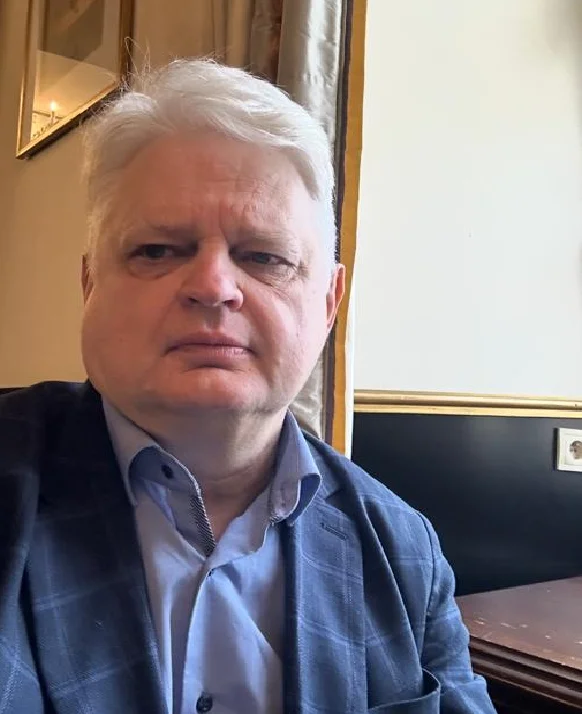
Biuro projektu IDUB zaprasza na wykład: „Przymusowa migracja do krajów UE w czasie wojny: długoterminowe skutki społeczne dla Ukrainy i Polski”. Profesor Yuriy Pachkovsky, Uniwersytet Narodowy im. Iwana Franki we Lwowie
Prelegent: Yuriy Pachkovsky ( Uniwersytet Narodowy im. Iwana Franki we Lwowie)
Data: 13 maja 2026 r. (środa), godz. 11.30
Gdzie: Instytut Socjologii UWr, ul. Koszarowa 3, sala 203
Tytuł wykładu: Przymusowa migracja do krajów UE w czasie wojny: długoterminowe skutki społeczne dla Ukrainy i Polski
Abstrakt wystąpienia:
Istotą wystąpienia będzie refleksja nad rezyliencją społeczną, w kontekście konsekwencji utraty kapitału ludzkiego, zagrożeń demograficznych oraz transformacji rynku pracy i polityki integracyjnej Ukrainy. Wykład dotyka także sposobu, w jaki umocnienie się ukraińskiej diaspory zmienia lokalne społeczności, przestrzeń edukacyjną i systemy zabezpieczenia społecznego w kontekście „zmęczenia wojną” i konkurencji o zasoby. Empirycznym przykładem tych zjawisk są nastroje migracyjne osób wewnętrznie przesiedlonych do Lwowa, z uwzględnieniem planów tych osób dotyczących dalszego zamieszkania w mieście, poziomu integracji, kluczowych determinant intencji migracyjnych oraz wpływu lokalnej polityki, inicjatyw społecznych i rynku pracy na długoterminowe strategie mobilności.
Prelegent:
Profesor Yuriy Pachkovsky (Uniwersytet Narodowy im. Iwana Franki we Lwowie) jest autorem ponad 200 prac naukowych, dotyczących w szczególności przemian społecznych, migracji (w tym sytuacji ukraińskich uchodźców w Polsce), zbiorowej traumie wojny rosyjsko-ukraińskiej, stabilności społecznej, dziedzictwa kulturowego, tożsamości lokalnej (publikował m.in. w czasopismach indeksowanych w bazach WoS, Scopus: „Historia Ecclesiastica”, „Sociological Research Online”, „East European Politics and Societies”, „Higher Education”); uczestnik w zbiorowych projektach w Ukrainie i za granicą (m.in. w międzynarodowym projekcie badawczym „SOR-WAR Project. Social Order Resilience During the War in Ukraine. Ukrainian and Polish Experiences”, realizowanym wspólnie z Instytutem Socjologii UWr, przy wsparciu Polskiej Agencji Narodowej ds. Wymiany Akademickiej NAWA, który koncentruje się na badaniu odporności porządku społecznego w warunkach wojny); profesor wizytujący na Uniwersytecie Kardynała Stefana Wyszyńskiego w Warszawie (2023).
_ _ _ _ _ _ _ _ _ _ _ _ _ _ _ _ _ _ _ _ _ _ _ _ _ _ _ _ _ _ _ _ _ _ _ _ _ _ _ _ _ _ _ _ _ _ _ _ _ _ _ _ _ _ _ _ _ _ _ _ _ _ _ _ _ _ _ _ _ _ _ _ _ _ _ _ _ _ _ _
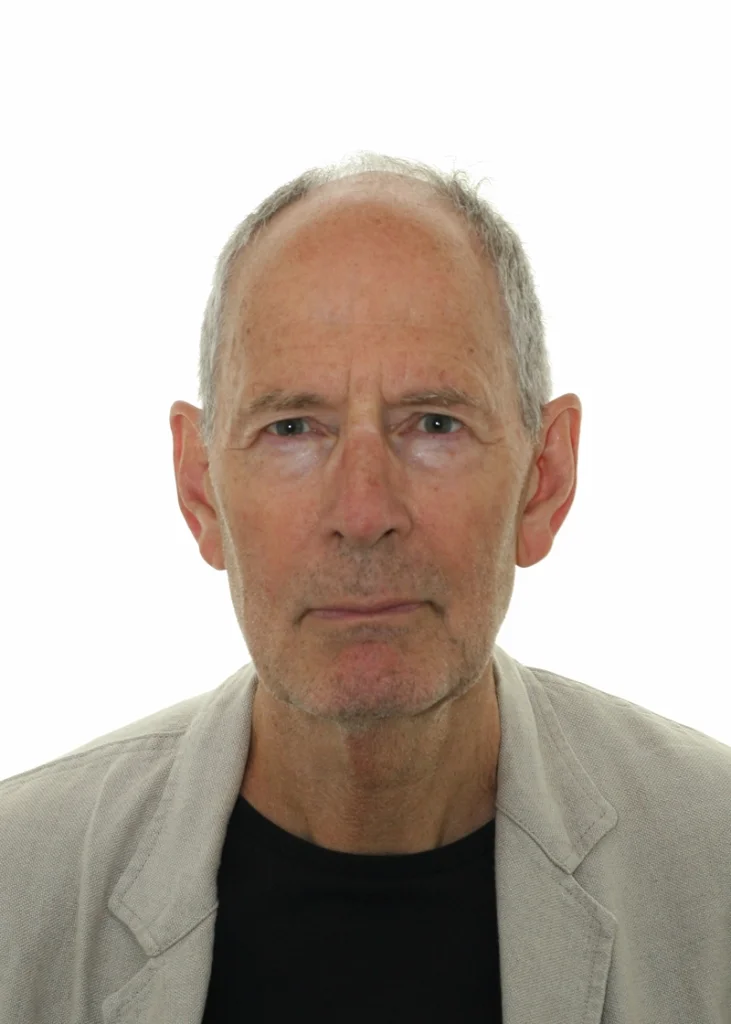
Biuro projektu IDUB zaprasza na wykład: „Fields of England” Profesor Roderick Mengham (Cambridge University)
Prelegent: Roderick Mengham (Cambridge University)
Data: 23.04 (czwartek), g. 12:00
Gdzie: Instytut Filologii Angielskiej, ul. Kuźnicza 22, sala 207
Tytuł wykładu: Fields of England
Abstrakt wystąpienia:
John Berger ends his short essay ‘Field’ with the following statement: ‘The field that you are standing before appears to have the same proportions as your own life.’ As with much of Berger’s writing, the finality of the statement gives it a convincing feel that is more or less proportionate to our hesitancy or doubt over its exact meaning, and this is one of the seductive aspects of his style. We might equally well consider how any field appears to have proportions that include those of our own lives while reaching far beyond them. Like old paintings, fields often show signs of more than one stage of composition, changes of mind as to their meaning and purpose, dents or scrapes or additions, all proclaiming that what we see is only the top layer of a multi-layered history. And like paintings, fields have frames, and frames offer the illusion of containment. The history there to be found in the fields of England cannot be contained by any one field. It is a history that has formed all of them, although the various stages of that history are given more or less local emphasis in the field you happen to be standing before. Up until the nineteenth century, the field you are standing before is likely to be familiar, and you may be on intimate terms with it, which means that it takes on the proportions of your own life, in such a way that your life appears as a proportion of the many that have stood there with much the same attitude.
In the twenty-first century you are more likely to pass by the field at speed, or pass through it on foot or on a bicycle, on the way to somewhere else. The field becomes an incident in your life. But consider yourself as an incident in the life of the field. The proportions of the life of the field are such that you have almost literally no place in it, no matter how long you stand there. The rites of passage in the life of the field, the changes of function and form, the periods of vitality and exhaustion, of upheaval and lethargy, are conducted at a rate invisibly slow to the human onlooker. Even the most epochal events of human history, the signing of a charter, the all-or-nothing battle, are over by nightfall. But the field is a field, rather than an undefined extent of land within the landscape, because of humans, and this project is about the relationship of the two.
It looks at that relationship through a series of frames: the picture-frame of the photograph and the language-frame of the micro-essay; each providing focus and structure while staying aware that each performs a small incident in the life of our relationship with the field, and that there are other occasions and other kinds and genres of performing this exchange. The whole project is undertaken in the belief that there are as many different genres of field as there are fields, and that our collaboration between different ways of construing them is a minimum requirement. And we take fields as our subject-matter before anything else because we are the subject-matter of every field.
_ _ _ _ _ _ _ _ _ _ _ _ _ _ _ _ _ _ _ _ _ _ _ _ _ _ _ _ _ _ _ _ _ _ _ _ _ _ _ _ _ _ _ _ _ _ _ _ _ _ _ _ _ _ _ _ _ _ _ _ _ _ _ _ _ _ _ _ _ _ _ _ _ _ _ _ _ _ _ _